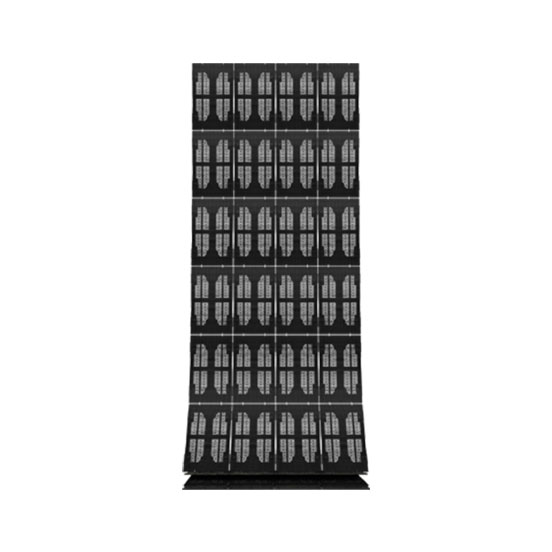
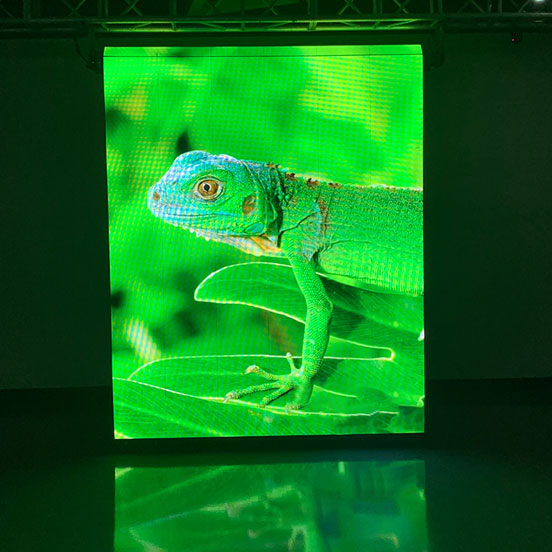
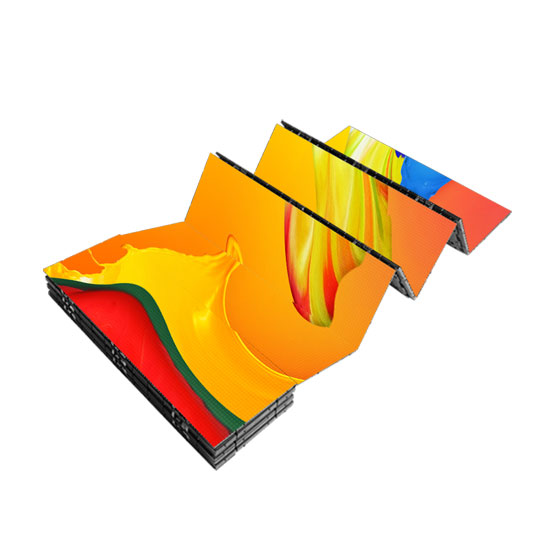
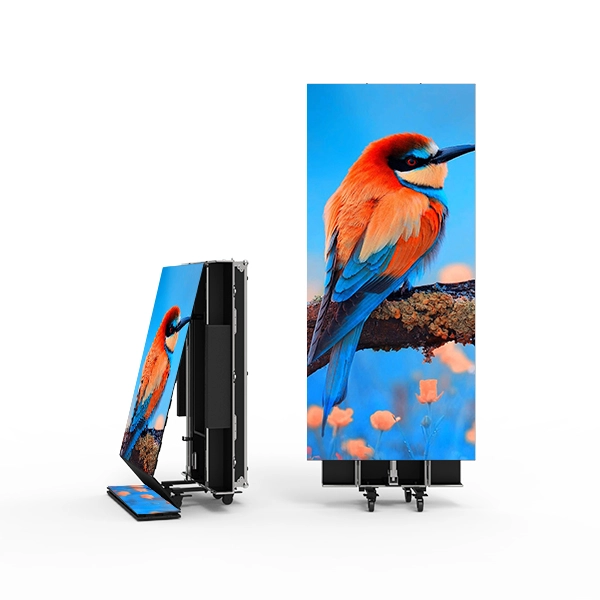
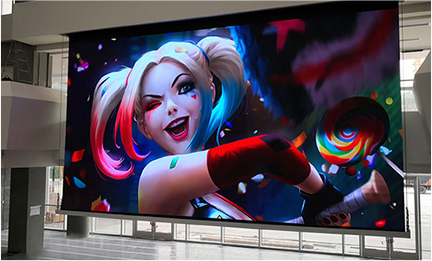
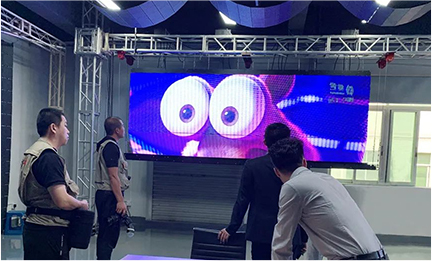
For stage and event projects, an LED rolling screen can simplify setup by reducing the amount of repetitive cabinet assembly required on site. Instead of building a large display from many rigid sections, a rollable screen can be deployed from a compact structure, making installation, dismantling, storage, and repeated venue changes more efficient.
This matters most for concerts, conferences, exhibitions, touring productions, and rental projects where the screen may only remain installed for hours or days. ONUMEN specifically designs its rolling LED solution for stage performances and event production, with quick setup of large display backdrops as one of its intended applications.
A conventional rental LED wall is usually assembled from multiple cabinets. Technicians must position each cabinet, secure mechanical connections, complete signal and power connections, and check alignment before testing the complete display.
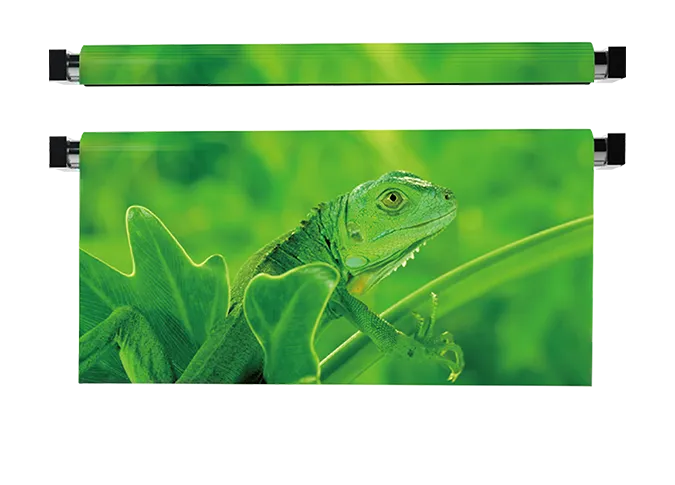
A rollup LED screen changes part of this workflow. Because the display itself can be rolled for storage and extended for use, less time is spent repeatedly constructing and dismantling the visual surface.
The difference becomes increasingly valuable as event schedules become tighter. Professional LED installation still requires proper structural support, power distribution, signal connections, and final testing, but reducing physical screen assembly can make the overall workflow more manageable.
Industry installation guidance also emphasizes that an event screen should be fully tested for image performance, connectivity, and power before the event begins.
Screen weight influences much more than transportation.
In a stage environment, LED displays may share structural capacity with lighting equipment, speakers, trusses, motors, and scenic elements. A lighter display gives technical teams more flexibility when planning the overall suspended load.
ONUMEN describes its indoor Rolling display as lightweight and rollable, with flexible installation and a space-saving structure. Its outdoor Rolling Plus version retains the rollable design while adding weather-oriented features for outdoor display environments.
For hanging installations, engineers should still evaluate the venue structure and rigging system rather than assuming that a lightweight screen removes structural requirements.
Yes, when the product and supporting structure are designed for hanging use.
Before deciding how an event screen will be installed, several practical questions should be answered:
Does the venue already have an overhead truss?
How high must the screen be positioned for audience visibility?
Will the installation be indoors or exposed to outdoor wind?
Will the display remain installed for several hours or several days?
These are also common considerations when choosing between hanging and ground-supported rental LED installations.
A hanging LED roller screen can be particularly useful where floor space must remain clear or where the display needs to form a large visual backdrop behind performers.
Fast changeovers are a major challenge in multipurpose venues.
A conference hall may host a presentation in the morning, a product launch in the afternoon, and an entertainment program in the evening. Rebuilding a conventional LED wall between different setups can consume valuable production time.
An LED rolling screen allows the visual system to become more adaptable. Rather than treating the screen as a permanent stage structure, production teams can deploy it when required and retract or remove it when the stage configuration changes.
This is particularly relevant to exhibitions and trade shows, where ONUMEN notes that the roll-up structure can support efficient setup, dismantling, and transportation.
It should not, provided the screen is specified correctly.
Installation convenience is only one part of LED screen selection. Event planners should still evaluate pixel pitch, viewing distance, screen dimensions, brightness, content resolution, and the surrounding lighting environment.
For example, a corporate presentation viewed from relatively close distances will place more emphasis on image detail. A concert backdrop viewed from much farther away may allow a larger pixel pitch while prioritizing screen size and stage impact.
Event display guidance similarly recommends evaluating screen position, physical dimensions, pixel pitch, and whether the display needs to be mobile or fixed before selecting equipment.
The strongest advantage appears in projects where installation is repeated.
Typical examples include touring performances, temporary stage productions, rental businesses, exhibitions, corporate events, press conferences, and brand activations. ONUMEN identifies concerts, live shows, press conferences, celebrations, exhibitions, and trade shows among the intended applications for its rolling LED display.
In these situations, buyers should look beyond the LED screen's purchase price. Installation labor, dismantling time, transport volume, storage requirements, rigging demands, and frequency of reuse all contribute to operating cost.
A screen that saves installation effort on every project may create greater long-term value than a cheaper system that requires substantially more handling each time it moves.
Rolling LED technology simplifies stage and event setup by changing how the display is handled before and after the show.
A rollup LED screen can reduce repetitive assembly, simplify storage and relocation, and provide greater flexibility for temporary stage configurations. For event companies that frequently move screens between venues, these operational advantages can directly affect crew efficiency and project turnaround.
Traditional cabinet LED walls remain suitable for many applications, particularly when displays stay assembled for extended periods. But when rapid deployment and repeated installation are priorities, an LED roller screen or LED rolling screen deserves serious consideration as part of the event production system.
Setup time depends on screen size, hanging structure, power and signal configuration, venue access, and crew experience. A rollable design can reduce the cabinet-by-cabinet assembly normally associated with conventional LED walls.
Yes, if the model is designed for outdoor conditions. ONUMEN's Rolling Plus system is designed with high-brightness and waterproof features for outdoor applications.
Confirm the screen size, viewing distance, mounting position, support structure, power supply, signal system, pixel pitch, indoor or outdoor environment, and final testing procedure before the event.
It can be particularly suitable for rental projects because repeated setup, dismantling, transportation, and storage make installation efficiency more important over the screen's service life.


 中文
中文 English
 日本語
日本語 한국어
한국어 français
 Deutsch
 Español
 русский
 português
 العربية
 Nederland