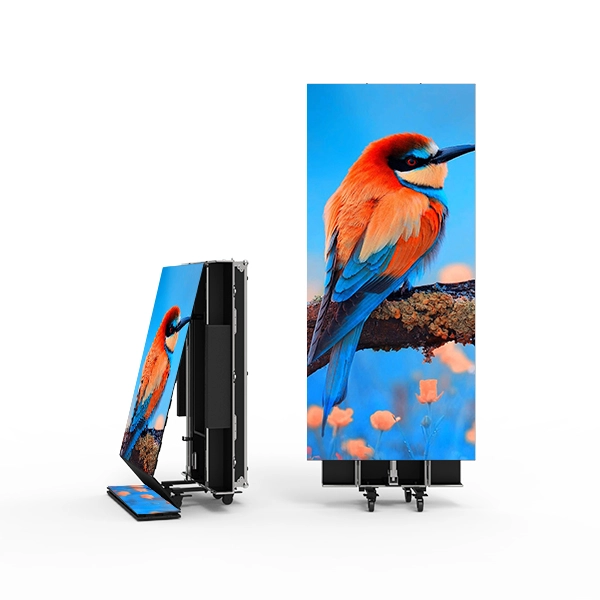
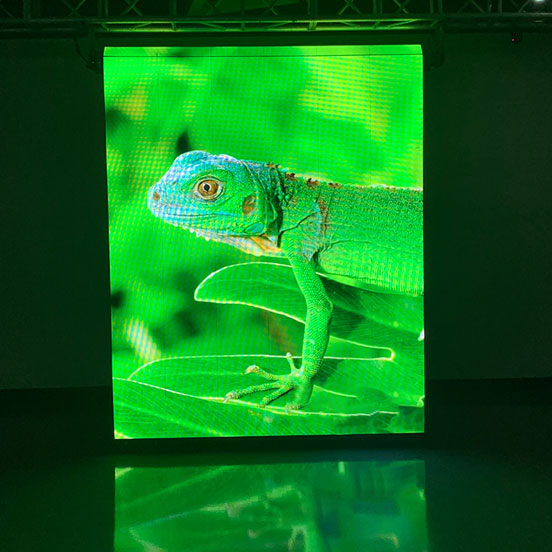
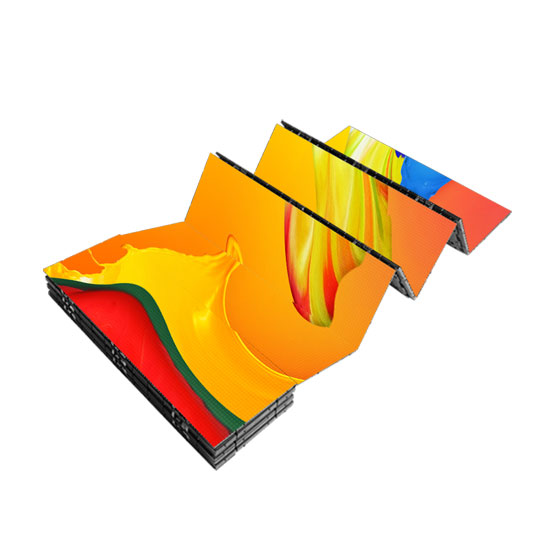
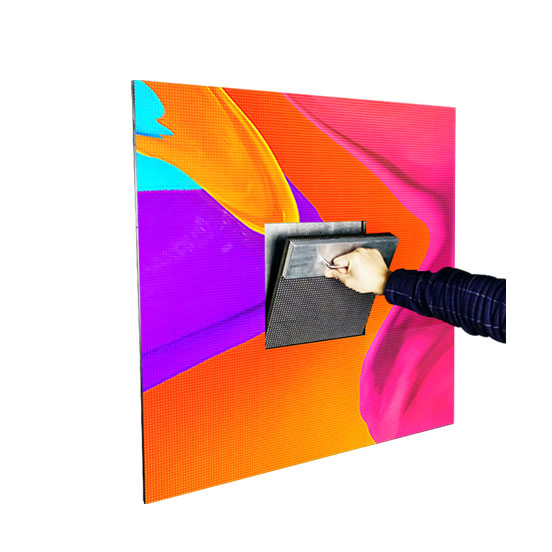
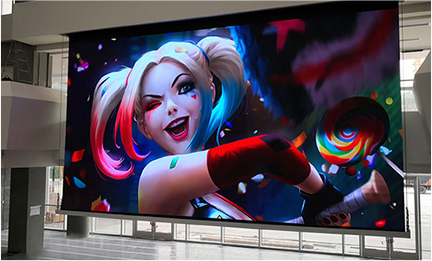
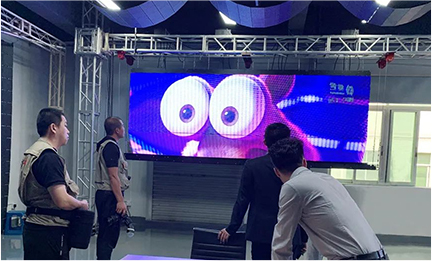
Event LED installation is moving toward lighter, faster, and more reusable systems. A rollable LED screen addresses several limitations of conventional cabinet-based LED walls: it reduces structural weight, simplifies deployment, occupies less storage space, and can shorten the time required to build and dismantle a stage screen.
For touring shows, exhibitions, product launches, conferences, rental projects, and temporary stages, these operational advantages can matter as much as image quality.
Traditional LED walls are normally built cabinet by cabinet. A large screen may require technicians to repeatedly lift, position, lock, connect, and align individual cabinets before power and signal testing begins.
A roll up LED display changes this workflow because the display body can be rolled for storage and extended when required. Instead of rebuilding the complete screen structure for every event, technicians can work with a much lighter display format.
ONUMEN's Rolling LED Screen, for example, uses an ultra-slim 15–18 mm structure with a weight of approximately 13–18 kg/m². Its rolling design is intended to simplify deployment and storage while reducing the load placed on the supporting structure.
For event contractors, this can translate into several practical benefits:
fewer repetitive cabinet installation steps;
less handling during setup and dismantling;
reduced storage requirements between events;
easier relocation between different venues.
This is particularly valuable when installation windows are limited.
Stage LED systems need to be considered together with trusses, lighting fixtures, speakers, motors, and other suspended equipment. Screen weight therefore directly affects the overall rigging plan.
A lightweight rollable LED screen can reduce the structural burden compared with conventional heavy cabinet arrays. This gives stage designers more flexibility when allocating allowable loads across the rigging system.
Some hanging LED solutions can also be combined with motorized lifting systems. ONUMEN's creative hanging display, for example, supports remote-controlled lifting, lowering, folding, and unfolding, allowing the display to be stored above the viewing area when it is not required.
For multipurpose stages, this creates an important advantage: the LED screen becomes part of the changing stage configuration rather than a fixed structure that must remain in place throughout the event.
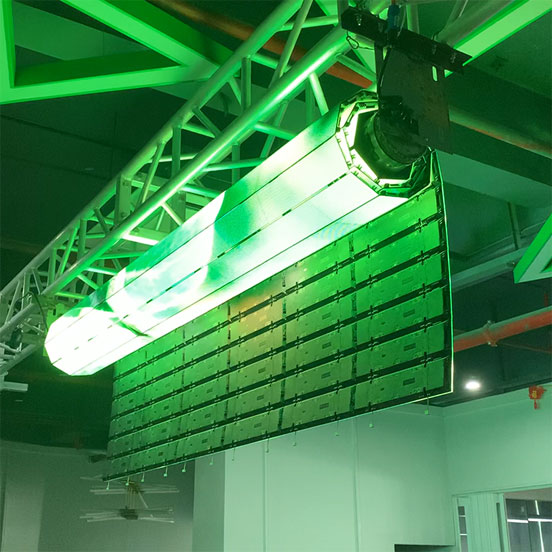
For applications that require frequent relocation, an LED roller shutter screen can be particularly effective.
Touring productions have costs that go beyond the LED screen itself. Equipment must be packed, loaded, transported, unloaded, installed, dismantled, and stored repeatedly. A screen design that reduces volume and handling requirements can therefore improve overall production efficiency.
A traditional LED wall may require numerous cabinets and flight cases. A rollable structure makes compact storage and repeated deployment easier.
This is one reason portable and foldable LED technologies are receiving greater attention in professional AV applications. Recent industry coverage has also highlighted mobility, compact storage, and simplified deployment as important developments in modern LED display systems.
No. Installation format and visual performance should be evaluated separately.
A professional roll up LED display still needs to satisfy the visual requirements of the venue. Buyers should evaluate pixel pitch, viewing distance, brightness, refresh rate, grayscale performance, and content type before choosing a model.
ONUMEN's rolling LED systems, for example, can reach peak brightness of up to 6,000 nits and are designed to provide high refresh rates and detailed image reproduction.
For an indoor conference with close viewing distances, fine image detail may be the priority. For an outdoor stage, brightness and weather resistance become more important. ONUMEN therefore separates its indoor Rolling series from the waterproof, high-brightness Rolling Plus series intended for outdoor applications.
Temporary event venues rarely have unlimited backstage or storage space.
A rigid LED cabinet maintains essentially the same physical form whether it is displaying content or being stored. A rollable LED screen can be retracted into a more compact configuration, helping reduce the space required when the display is not operating.
This can be useful for:
exhibition booths with limited storage;
stages requiring multiple scene changes;
conference halls used for different functions;
touring productions with restricted transport capacity.
A retractable screen can also allow designers to reveal scenery, performers, lighting effects, or architectural elements that would otherwise remain blocked by a fixed LED wall.
A roll up LED display is especially worth considering when the screen will be installed and removed frequently.
It is a strong fit when the project involves tight installation schedules, repeated transportation, hanging installation, limited storage space, or frequent changes to the stage layout.
A conventional cabinet LED screen may still be appropriate for permanent installations or projects where the display will remain assembled for long periods.
For rental companies and event production teams, however, the better comparison is not simply the purchase price of each screen. Labor, transportation, rigging requirements, installation time, storage, and reuse frequency should all be included when evaluating total operating cost.
Roll-up LED technology is changing event and stage installation because it addresses the operational problems that conventional LED walls often create.
A lighter and more compact rollable LED screen can simplify rigging, reduce handling, support faster installation and dismantling, and make repeated transportation easier. For stages, exhibitions, touring productions, conferences, and rental applications, these advantages can improve both technical flexibility and project efficiency.
The most suitable solution still depends on screen size, viewing distance, installation environment, brightness requirements, and how frequently the display will be moved. For projects where rapid deployment and repeated reuse are priorities, however, the roll up LED display is becoming an increasingly practical alternative to traditional cabinet-based LED walls.
Installation depends on the model, but many systems use hanging or supporting structures that allow the LED screen to be extended vertically instead of assembling numerous rigid cabinets individually.
Yes, provided the selected model has appropriate brightness and environmental protection. ONUMEN's Rolling Plus series is designed with waterproof and high-brightness features for outdoor applications.
Consider pixel pitch, viewing distance, screen dimensions, weight, brightness, indoor or outdoor use, rigging method, transportation frequency, installation time, and maintenance access.


 中文
中文 English
 日本語
日本語 한국어
한국어 français
 Deutsch
 Español
 русский
 português
 العربية
 Nederland