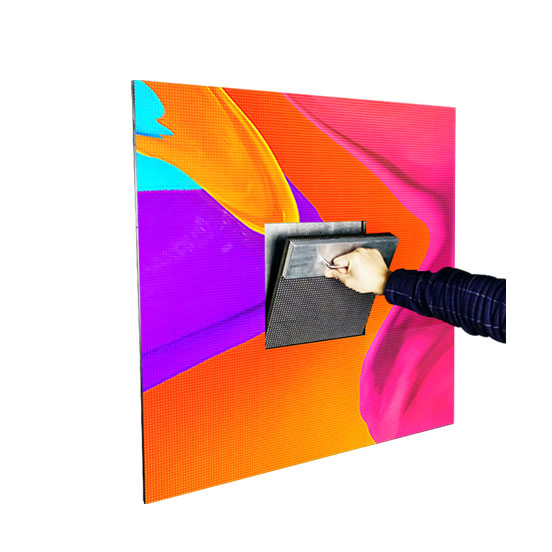
The control receiving card and the power supply are separated from the screen body.
The control box composed of the control receiving card and the power supply is designed to be separated from the screen body, which is convenient to maintain the control card and the power supply, so that the heat emitted by the largest heat source (power supply) will not affect the screen, making the working temperature of the bright screen higher than the conventional built-in power supply The temperature of the cabinet screen is much lower, which can extend the life of the LED lamp beads.
The circuit connection between the unit boards of the screen body is a dual design in which connectors and welding wires exist at the same time. Connector design: for quick repair
Welding wire design: can ensure stable work (the main source of failure in the later stage of outdoor screen use is the connector, so our screen body part is designed without connector, and the connector is only used as a quick repair and replacement unit board.)
The design of no connectors and no power supply heat ensures the stable and reliable operation of the screen body (except for lamp beads, the stability of the lamp beads depends on the cost). Our products have been sold for 8 years, and the facts have proved that within 2-3 years No maintenance is required. The failure rate reported by our old customers for many years is only 1/5 or even 1/10 of that of conventional cabinet screens.
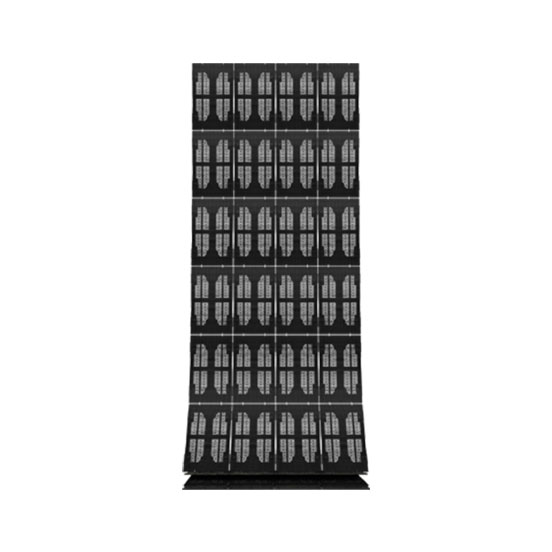
The mechanical connection between the screens is a steel wire. The load-bearing of the entire screen is actually borne by the steel wire built into the screen. The unit board is attached to the steel wire, and the head and tail of the wire are fastened to the steel structure with bolts.
There are two ways to protect the screen from wind, magnet sticking or buckle locking, or a combination of the two (that is, the buckle and the magnet interval design, some are buckle installation, and some are magnet installation).
The screen unit board has a built-in powerful magnet, which is convenient for installation and maintenance. It is no problem to stick a small screen of tens of square meters with a magnet. Generally, the installation can be completed in 1 hour, and the magnetic attraction force per square meter can reach more than 100 kg, which can easily resist typhoons.
The buckles are locked, all mechanical buckles are fixed on the steel structure, and windproof depends on the mechanical structure. But the installation is more troublesome than magnetic suction. The screen supports both pre-maintenance and post-maintenance, depending on the specific installation structure.
Screw holes are designed on the screen, and the unit board is locked on the steel frame with screws on the front of the screen.
This design is mainly aimed at customers who are worried about the weak windproof of the magnet, using this fixing method.
The screen is waterproof by PCBA double-sided potting.
The actual test can work in water and easily reach the protection level of IP65.
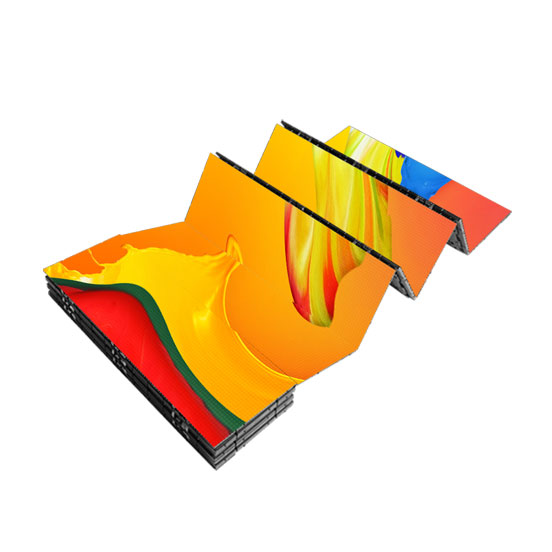
The feature of being foldable is of little significance in outdoor fixed screen applications.
The fixed installation mainly uses the characteristics of light (10/12 kg per square meter) and thin (screen thickness 16-20 mm)
1. Separate Design of Control/Receiver Card, Power Supply, and Screen Body
The control box (housing the control/receiver card and power supply) is designed separately from the screen body. This facilitates maintenance of the control card and power supply while preventing heat from major sources (such as the power supply) from affecting the screen. As a result, high-brightness screens operate at much lower temperatures compared to conventional models with built-in power supplies, thereby extending the lifespan of the LED beads.
2. Dual Circuit Connection Between Screen Panels: Plug-in and Soldered Wires
3. Plug-in Design: Enables quick repairs.
4. Soldered Wire Design: Ensures stable operation.
(Note: In outdoor screens, plug-in connectors are often a primary source of failure over time. Therefore, our screen body is designed without plug-in connectors, which are only used for rapid panel replacement during maintenance.)
The absence of plug-in connectors and heat from the power supply ensures stable and reliable screen performance (excluding LED beads, whose stability depends on cost). Our products have been on the market for eight years, proving that they require almost no maintenance within 2–3 years. Long-term customer feedback indicates a failure rate only 1/5 to 1/10 that of conventional cabinet screens.
5. Mechanical Connection Between Panels via Steel Wires
The entire screen’s weight is supported by built-in steel wires, with panels attached to these wires. The wire ends are secured to the steel structure using bolts.
6. Wind Resistance Methods:
Magnetic adhesion or buckle locking, or a combination of both (alternating buckles and magnets).
Panels feature built-in strong magnets, allowing easy installation and maintenance via magnetic adhesion. For small screens of tens of square meters, magnetic installation is sufficient and can typically be completed within an hour. Magnetic force can exceed 100 kg per square meter, providing reliable resistance even against typhoons.
Buckle locking secures all panels mechanically to the steel structure, offering robust wind resistance, though installation is slightly more complex than magnetic adhesion.
The screen supports both front and rear maintenance, depending on the installation structure.
7. Screw Holes for Additional Fixation
Screw holes are designed on the front of the screen, allowing panels to be directly fastened to the steel frame with screws. This option is provided for customers concerned about the stability of magnetic adhesion.
8. Waterproofing via Double-Sided PCBA Potting
The screen adopts double-sided potting waterproofing for the PCB assembly. Actual testing confirms it can operate even when submerged, easily achieving an IP65 protection rating.
9. Foldable Feature
The foldable design is less critical for fixed outdoor installations, where the primary advantages are lightweight (10–12 kg per square meter) and thin profile (16–20 mm thick).
1. Standard Configuration:
Computer,Sending Card,Screen,Power Box,Cables,
DC Power Cable (Power Box to Screen),
Daisy-Chained Signal Cable (for signal transmission between control boxes),
Daisy-Chained Power Cable (for power transfer between control boxes),
Main Power Cable (connects the first control box to mains electricity),
Main Signal Cable (connects the first control box to the sending card)
2. Packaging:
Flight Case (for rental applications)
Wooden Crate (for fixed installations)
Optional Accessories:
Video Processor
Auto-Lifting System
3. Optional Accessories:
Video Processor,Auto-Lifting System
When installing Onumen screens using a hanging method, the suspension crossbeam must remain perfectly horizontal and straight at all times—whether stationary or in motion—with no tilting or bending allowed.
For example, if the screen dimensions are 7 m in height and 10 m in width, the maximum vertical deviation (sag or bend) across the entire 10 m width of the screen’s top edge must not exceed 5 mm.
If this tolerance is exceeded, the screen's weight may concentrate on a single steel wire, leading to potential wire breakage and structural failure.
Wind prevention methods: Magnetic adhesion (the screen unit board is equipped with a strong magnet inside, and the magnetic adhesion installation and maintenance are convenient. It is no problem to use magnetic adhesion for a small screen of dozens of square meters. Generally, the installation can be completed within one hour, and the magnetic force per square meter can reach more than 100 kilograms, easily resisting typhoons.)
Clamp locking (all mechanical clamps are fixed on the steel structure, and wind prevention relies on the mechanical structure. However, the installation is a bit more troublesome than magnetic adhesion.)
Combination of magnetic adhesion and clamp locking (that is, the clamps and magnets are designed alternately, with some parts installed by clamps and some by magnets).
The screen supports both front and rear maintenance, depending on the specific installation structure.
The Onumen screen is supported by steel wires. The unit panels are attached to the steel wires.
Taking the common 250*250 mm unit panel as an example, each unit panel is equipped with 2 steel wires with a diameter of 1.2 mm. There are 8 steel wires for every meter of the screen width. According to national standards, the breaking tensile force of each steel wire with a diameter of 1.2 mm is 100 kg. The weight of the folding screen per square meter is generally 8-12 kg.
For every meter of screen width, the maximum screen height that the steel wires can support is: 8*100/12 = 66 m. Therefore, theoretically, the Onumen screen's steel wires can support a screen as high as 66 m. According to national standards, the safety level of elevator steel wires is the highest 5, and the maximum load capacity is 1/5 of the breaking tensile force of the steel wire.
According to the highest national standard, hanging a 66-meter-high screen with the Onumen folding screen is very safe. In general usage, the hanging height of the screen is about 10 meters, and applications exceeding 20 meters are very rare. Therefore, in the design of screen hanging, sufficient safety space has been reserved, and the steel wires operate completely within the safe range.
First off, the modules are connected via safety cables, in between the modules are the intermodular “keep-off” distance, or “seam” which could be negligible, secondly, we have “pitch” in LEDs, pitch here means the distance between LEDs, structurally speaking, we make LED pitch=keep-off distance, which means the smaller the pitch, the smaller the keep-off distance, a module like P12, the pitch is large enough to allow bigger keep-off distance, hence better flexibility/foldability, whereas, for finer pitch like P2.6, P3.9, the keep-off distance is too small to allow full foldability.
Inside the box is the power supply unit which contains slightly bigger electric components, cooling parts and even magnets. The independent box design ensures better cooling and keep interference to a minimum.
There is no specific reason why those unit(tiles) are the sizes they are. They are by-products of optimal structural design. The total LED number of a unit is usually powered number with 2 as base, a case in point, P6 is 32*32, and the pitch is 6mm, hence the unit size is 192mm*192mm. Strictly speaking, the unit size can be larger, but that’s not good for foldability.
The magnets in Slim Paste are used to mount or install on wall or ceiling, whereas the magnets located at four sides in Slim Pro are used to ensure surface alignment for all units(tiles).
No, there are at least two reasons why it won’t happen: first off, the screen is installed by hanging on top, and the fasteners are also fixed to the curved surface, hence the screen will be also curved along the fasteners; second, even though the magnets do want to snap the adjacent units, the magnetic force will be counteracted by gravity.
No, if this is the concern, we suggest installing fasteners sideways to tension the screen.
Please specify the pitch, screen size(width and height), and usage(indoor or outdoor)


 中文
中文 English
 日本語
日本語 한국어
한국어 français
 Deutsch
 Español
 русский
 português
 العربية
 Nederland